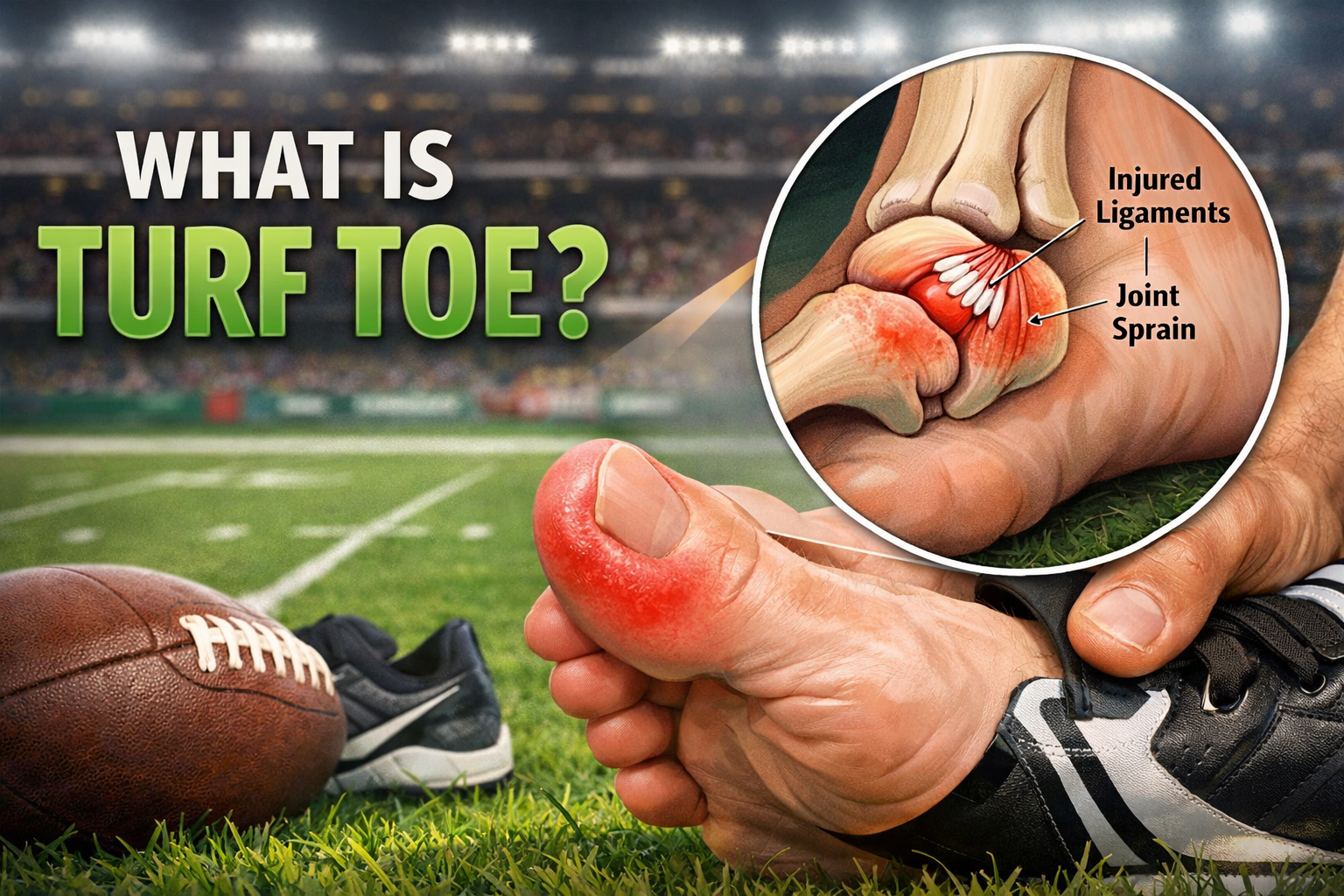
what is turf toe
What Is Turf Toe?
What is turf toe? It is a powerful and sudden sprain of the big toe joint that can stop even elite athletes instantly. Turf toe happens when the big toe bends too far upward while the foot stays firmly planted on the ground. Many players first ask what is turf toe injury after a sharp push-off on hard artificial turf. This injury stretches or tears the strong ligaments and tissues beneath the big toe, causing sharp pain at the base of the joint.
You might wonder what is turf toe in football because it strikes running backs, linemen, and receivers most often. The great news is that with the right care, you can recover fully and return stronger than ever. Turf toe does not have to end your season. Understanding it gives you control and confidence on the field.

Clear view of what is turf toe injury at the big toe joint
What Is Turf Toe Injury? How It Impacts Your Performance
Turf toe injury occurs when the soft tissues around your big toe joint stretch or tear due to extreme upward force. Your big toe provides explosive push-off power during sprints and quick cuts. When it gets jammed while your foot sticks to the turf, the joint takes heavy stress. Turf toe injury brings immediate sharp pain, followed by swelling and tenderness. You may notice bruising under the toe or on top of the foot. This injury quickly reduces your speed and cutting ability. Rest intelligently, follow proven steps, and you will feel unstoppable again.
Turf toe injury teaches every player to listen to their body and protect their feet for a long, successful career. With proper attention, you regain full strength and confidence faster than you expect.
What Is Turf Toe? A Simple and Clear Explanation
What is turf toe? It is a sprain focused on the main joint of your big toe – the metatarsophalangeal (MTP) joint. Strong ligaments, tendons, and the plantar plate keep this joint stable and powerful. Turf toe stretches or tears these structures when the toe hyperextends suddenly. The pain hits right at the bottom of the joint. You may feel the toe is loose or unstable when moving it. Turf toe surprises many because the name sounds minor, yet the impact on performance is significant. Walking, running, and pushing off become painful until you heal properly.
The best part? Knowledge turns worry into control. You can take charge of your recovery and return to the activities you love with even greater awareness of your body.
What Is Turf Toe in Football? Why It Happens So Often
What is turf toe in football is one of the most common and frustrating injuries on artificial turf. The hard surface grips your cleats tightly, so when you push hard to accelerate or change direction, the big toe can jam upward while the foot stays planted. Turf toe in football happens in a split second during tackles, blocks, or explosive cuts. It affects players who rely on quick bursts of speed. You feel sharp pain instantly under the big toe. Turf toe in football can sideline you if ignored, but countless athletes come back stronger by using better footwear, taping, and foot-strengthening exercises.
What Is Turf Toe Injury in Football – Real Athlete Experiences
Turf toe injury in football shows up frequently among high-impact players. Imagine bursting through the line only to feel your big toe jam hard against the unyielding turf. Turf toe injury in football causes immediate swelling, bruising, and loss of push-off power. The constant pounding from cleats on artificial fields increases the risk. Many professional and amateur athletes share stories of missing key games due to this injury. Yet the inspiring reality is that with early action and proper rehabilitation, you regain full explosiveness. Turf toe injury in football ultimately makes you a smarter, tougher player.
What Is Turf Toe Caused By? Key Triggers
Turf toe caused by is excessive upward bending of the big toe while the foot remains fixed on the ground. Hard artificial turf, aggressive cleats, and sudden stops or tackles are major factors. Turf toe caused by also includes poor shoe support and weak foot muscles. The joint tissues simply cannot handle the extreme force. Understanding these causes empowers you to make smarter choices – better cleats, proper warm-ups, and strong foot exercises can dramatically reduce your risk.

Recognizing the Symptoms of What Is Turf Toe
Symptoms of turf toe appear quickly. You feel sharp pain at the base of the big toe, especially when pushing off. Swelling, bruising, and tenderness follow soon after. The joint may feel stiff or unstable. Turf toe makes normal walking difficult and running nearly impossible at first. Early recognition allows faster healing. Never ignore these signs – acting quickly protects your long-term foot health and performance.
How Doctors Diagnose What Is Turf Toe
Doctors diagnose it through a physical exam, your injury story, and imaging like X-rays or MRI. Injuries are graded from 1 to 3. Grade 1 is mild stretching, Grade 2 involves partial tears, and Grade 3 means complete tears with possible joint instability. Accurate diagnosis leads to the most effective treatment plan and fastest recovery.
Effective Treatments for What Is Turf Toe
Treatments for turf toe start with RICE – Rest, Ice, Compression, and Elevation. Stiff-soled shoes, taping, and custom inserts limit harmful movement. Physical therapy rebuilds strength and flexibility. Most cases heal well without surgery when you follow the plan consistently. You stay as active as possible while protecting the joint.
What Is Turf Toe Surgery? When It Is Needed
Turf toe surgery is reserved for severe Grade 3 injuries that do not improve with conservative care. Surgeons repair torn ligaments and the plantar plate to restore stability. Recovery takes time but delivers excellent long-term results for athletes who need full push-off power. Most players return to their sport stronger after proper rehabilitation.
Recovery Timeline After a What Is Turf Toe Injury
Recovery after Turf toe injury varies by grade. Mild cases improve in 1–3 weeks. Moderate injuries need 4–8 weeks. Severe tears may require 3–6 months for complete healing. Patience and consistent rehab bring the best outcomes. You will notice steady improvement in pain, motion, and strength every week.
How to Prevent What Is Turf Toe in Your Game
Prevent turf toe with supportive stiff-soled cleats, regular foot and toe strengthening exercises, proper warm-ups, and smart playing technique. Good habits today mean more powerful, pain-free seasons tomorrow.
Turf Toe Grades – Complete Comparison Table
| Grade | Description | Main Symptoms | Initial Treatment | Recovery Time |
|---|---|---|---|---|
| Grade 1 (Mild) | Ligaments stretched but not torn | Mild pain, slight swelling, tenderness | RICE, taping, stiff shoes | 1–3 weeks |
| Grade 2 (Moderate) | Partial tear of ligaments and plantar plate | Moderate swelling, bruising, limited motion | RICE, walking boot, physical therapy | 4–8 weeks |
| Grade 3 (Severe) | Complete tear, possible joint dislocation | Severe pain, major swelling, unstable joint | RICE + possible surgery, immobilization | 3–6 months |
Frequently Asked Questions About What Is Turf Toe
What is turf toe caused by is usually forceful upward bending of the big toe on hard surfaces like artificial turf during quick movements.
Turf toe injury healing time depends on severity – from a few weeks for mild cases to several months for severe ones with proper care.
Turf toe in football commonly affects players who make explosive cuts and pushes on artificial turf, especially running backs and linemen.
Turf toe surgery is considered only for severe complete tears that do not respond to rest and therapy or leave the joint unstable.
Light activity with proper taping and support is sometimes possible, but full competition should wait until pain and swelling decrease significantly.
Prevent turf toe injury with quality footwear, foot strengthening exercises, proper warm-up routines, and mindful cutting techniques on the field.
Your Powerful Comeback Starts Now
Turf toe no longer has to hold you back. With this complete guide covering what is turf toe, its causes, symptoms, treatments, and prevention, you have everything you need to heal strong and return to peak performance. Take action today, stay consistent, and celebrate every step of your recovery. You are built for greatness on and off the field.
About the Author
